Organize
Bring crude information from different sources into one technical environment.

CUTS converts incomplete, inconsistent, or differently formatted crude oil assays into a complete and internally consistent crude oil characterization.
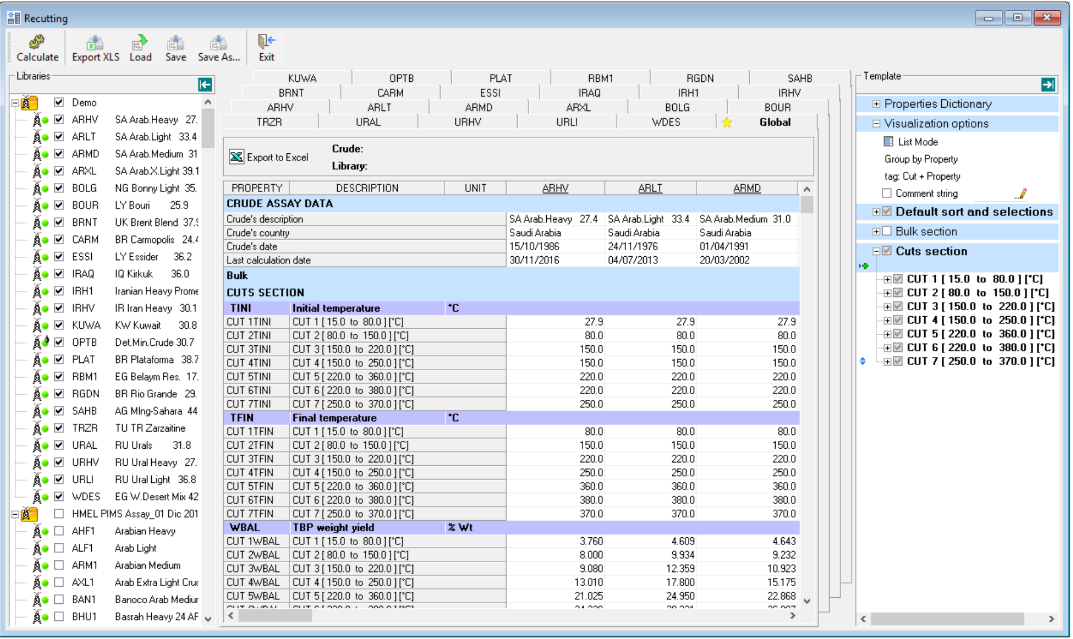
refinery scheduling Every refinery decision begins with an understanding of the crude oil being processed. Reliable planning, scheduling, blending, optimization, and simulation depend on accurate and internally consistent assay data.
refinery scheduling CUTS is developed for refinery professionals who need to organize, validate, reconstruct, and apply crude assay information throughout the engineering workflow.
Using proprietary multidimensional regression and advanced data reconciliation, CUTS transforms incomplete or inconsistent laboratory measurements into a coherent, queryable crude assay database.
See how characterization worksBring crude information from different sources into one technical environment.
Resolve gaps, inconsistent formats, and non-uniform laboratory cut points.
Represent each crude continuously across its full boiling range.
Use consistent properties in refinery planning and engineering tools.
Every crude oil is unique. Its processing behaviour, product yields, and product quality depend on how physical and chemical properties are distributed throughout the boiling range.
Assays may originate from laboratories, crude suppliers, published databases, or historical refinery records.
Available fractions often use non-standard boiling ranges that cannot be compared directly.
Important physical or chemical properties may not be reported for every required fraction.
TBP, ASTM D86, partial laboratory measurements, and other methods may require reconciliation.
Any inconsistency introduced at the crude assay stage can propagate into feedstock evaluation, blending studies, refinery economics, planning models, and process simulations.
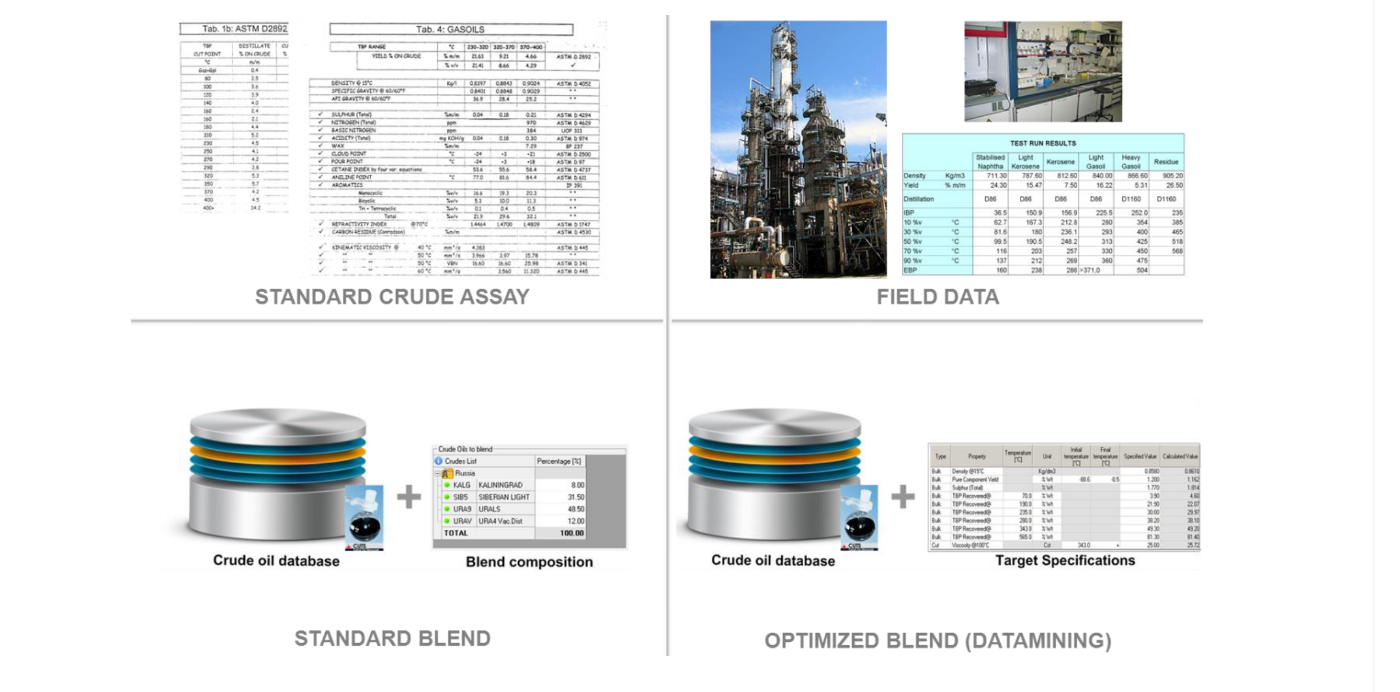
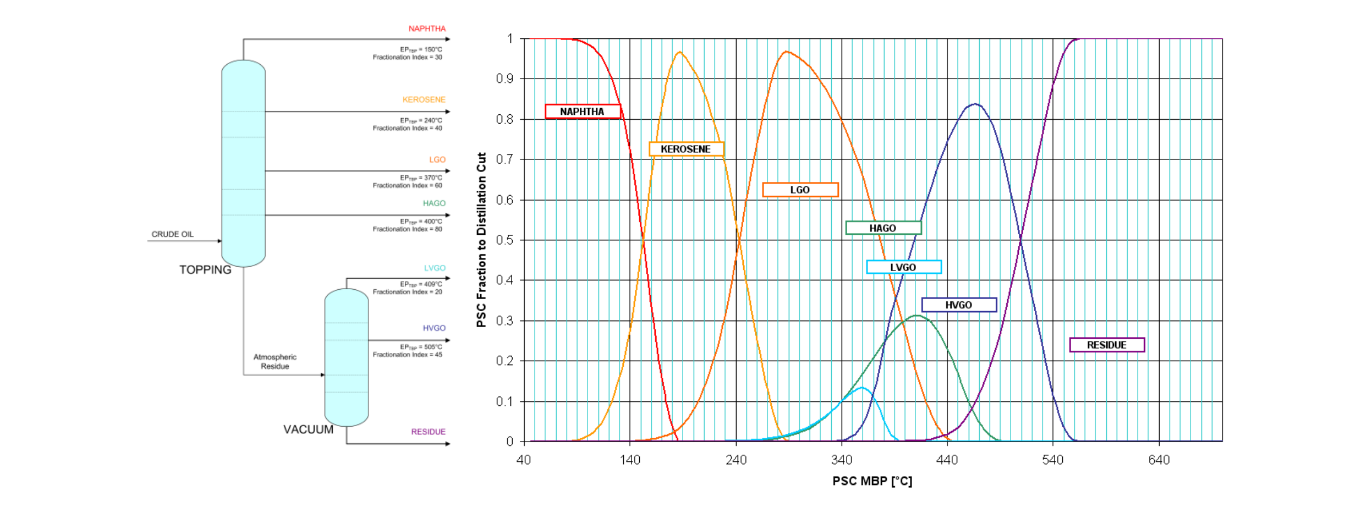
Laboratory assays typically report properties only for selected fractions. CUTS converts these isolated measurements into a continuous and internally consistent model.
The crude is represented as a distribution of pure components and pseudo-components spanning the full boiling range. This allows the properties of virtually any required fraction to be calculated consistently.
Regression identifies relationships in available data and uses those relationships to estimate missing or uncertain values. CUTS evaluates several properties together rather than treating each measurement in isolation.
Evaluate how reported assay properties vary together across the boiling range.
Resolve inconsistencies between measurements, cut points, and reporting formats.
Calculate technically reasonable values supported by the available assay information.
Maintain the behaviour of the TBP and reported property curves.
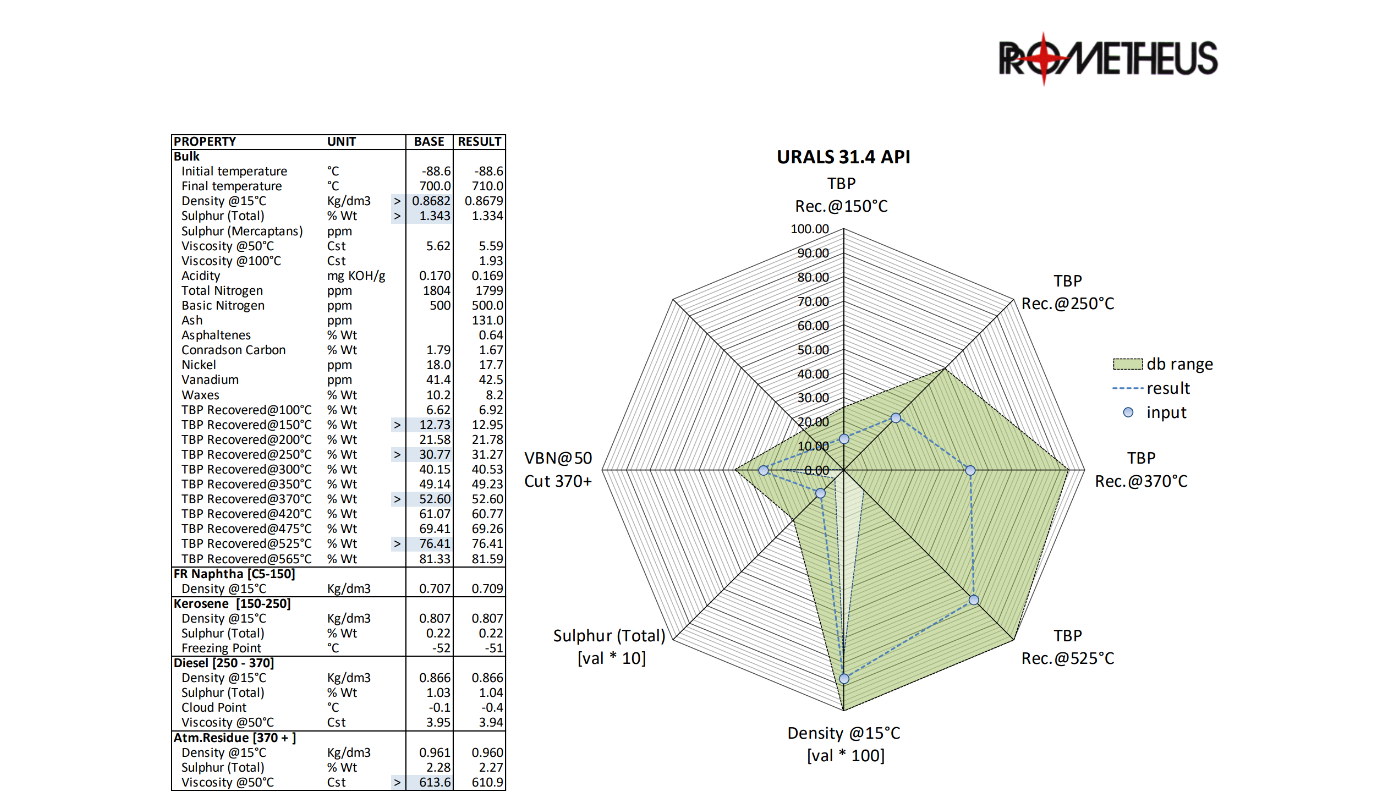
Once the crude has been characterized continuously, CUTS can recalculate yields and properties for different fractionation schemes without rebuilding the original assay.
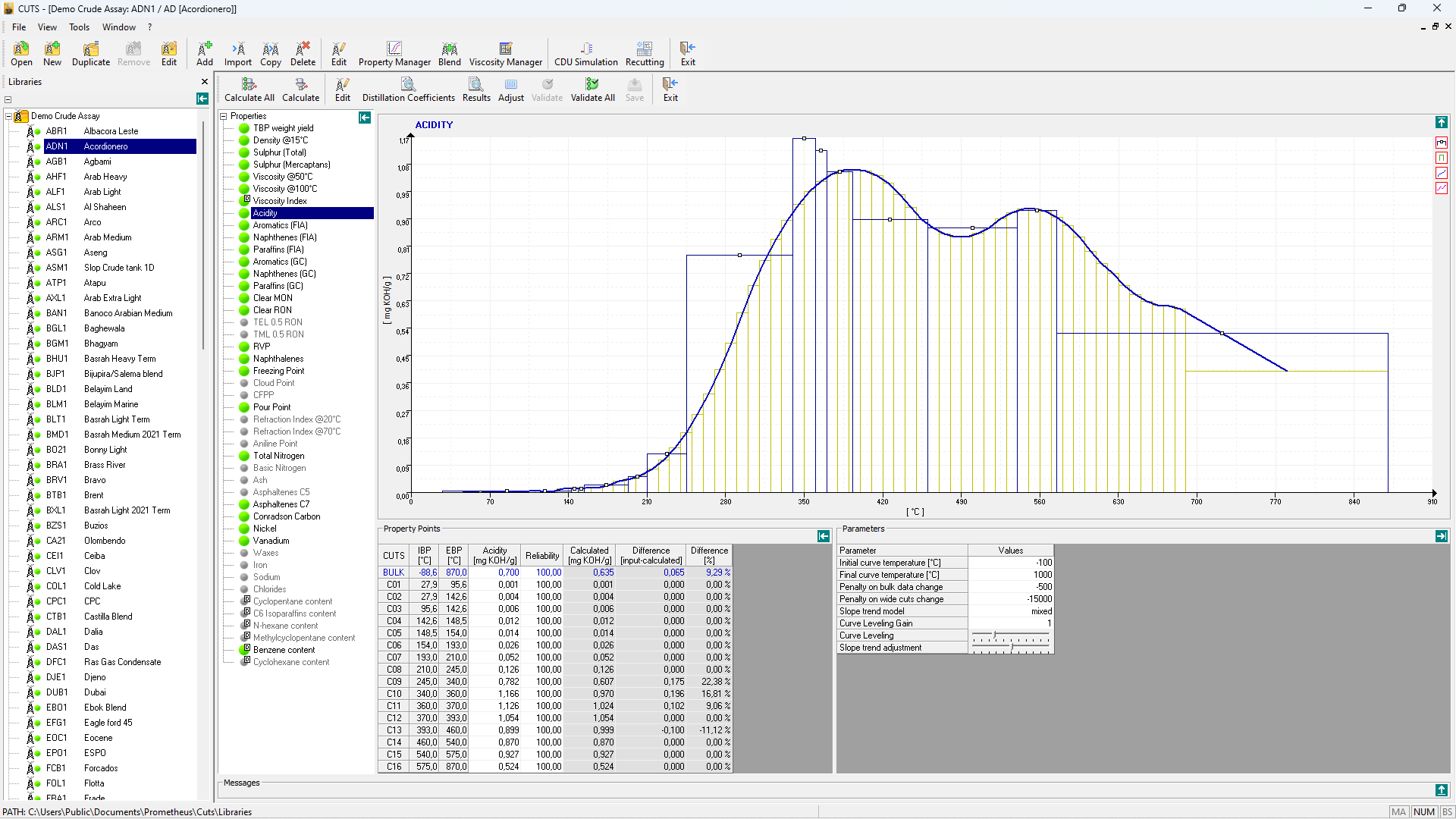
Preserve the original laboratory information and reported fractions.
Reconstruct the full crude using contiguous pseudo-components.
Define broad or narrow fractions according to each study’s requirements.
Calculate yields and properties from the same underlying characterization.
Crude oil contains thousands of compounds, making direct representation impractical for most refinery models.
CUTS groups hydrocarbons with similar characteristics into contiguous pseudo-components. Each narrow 10°C fraction receives calculated physical and chemical properties.
This provides a practical and computationally efficient description of the crude while preserving property relationships throughout the characterization.
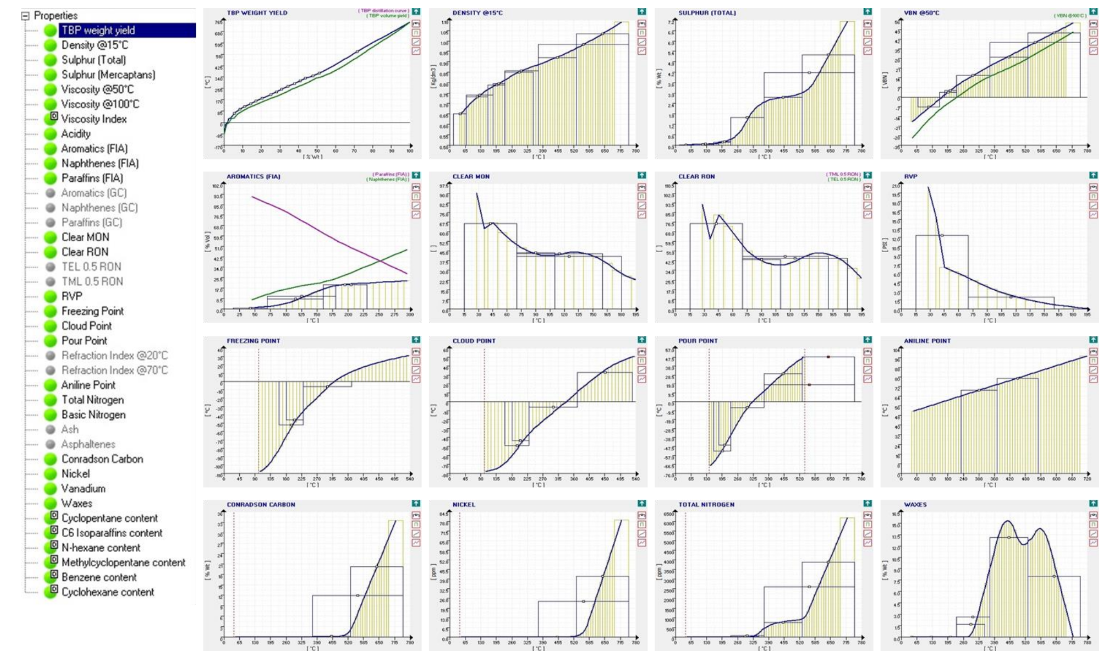
CUTS interprets laboratory information as a connected technical dataset rather than as unrelated measurements.
Describes crude behaviour through the boiling range and provides a basis for continuous fraction characterization.
Supports interpretation of reported distillation behaviour where assays use different testing methods.
Incorporates physical and chemical measurements reported for different petroleum fractions.
Reconciles available information to develop the most coherent model supported by the source assay.
One consistent characterization can support multiple engineering and operational activities.
Evaluate crude slates, production plans, and refinery economics using comparable feedstock data.
Our refinery scheduling solutions optimize crude oil receipts, tank movements, production planning, and processing operations. Improve refinery scheduling efficiency, maximize throughput, reduce operational constraints, and support better day-to-day refinery decision-making.
Compare and combine crudes using consistent boiling-range and property definitions.
Supply representative pseudo-component properties for refinery optimization models.
Prepare consistent feed characterization for CDU and other refinery process models.
Compare alternative crude oils and support crude selection using a common technical basis.
A crude characterization is rarely used in isolation. Planning, scheduling, simulation, blending, and optimization teams may all require the same crude information in different forms.
CUTS provides a common technical foundation so departments do not need to create separate interpretations of the same laboratory assay.
Properties can be prepared for any required fraction, simplifying data exchange between engineering disciplines and downstream tools.
CUTS reduces repeated assay preparation and provides a consistent technical basis for refinery engineering studies.
Work from a complete and internally consistent crude characterization.
Minimize time spent checking laboratory reports and estimating missing values.
Use the same technical assumptions across departments and studies.
Query properties for the fractions required by each engineering task.
Supply coherent pseudo-component properties to planning and simulation tools.
Reduce uncertainty in crude selection, blending, and operational studies.
Many crude assay systems primarily store and distribute reported laboratory values. CUTS creates a reusable engineering model of the crude.
It combines data reconciliation, continuous characterization, pseudo-component generation, and flexible recutting within one technical workflow.
Developed specifically for crude assay reconstruction.
Extends beyond the fractions reported in the original assay.
Provides detailed and contiguous property distributions.
Calculates different fraction schemes from one consistent model.
Supports multiple engineering uses from a shared foundation.
Crude assay management software helps refineries organize, validate, reconstruct, and apply assay data throughout the engineering workflow. It converts laboratory measurements into a consistent characterization for planning, scheduling, blending, optimization, and simulation.
Assays may come from different laboratories, suppliers, databases, or historical records. They often use different cut points, test methods, units, and property sets.
CUTS uses multidimensional regression to evaluate relationships between several reported properties simultaneously. It then creates values that remain consistent with the available assay and the overall property trends.
Pseudo-components are narrow boiling-range fractions used to represent groups of hydrocarbons with similar characteristics. CUTS generates contiguous 10°C cuts across the entire crude.
Crude recutting recalculates petroleum fractions using cut points different from those reported in the original assay. CUTS performs this from the continuous characterization without altering the original data.
Yes. CUTS is designed to reconcile incomplete and differently formatted assays. The quality of the resulting model still depends on the quantity and reliability of the available source data.
Applications include feedstock evaluation, crude selection, refinery planning, scheduling, crude blending, LP optimization, and process simulation.
Engineering models are only as reliable as their input data. Consistent property relationships reduce conflicting results and improve confidence across planning, simulation, and optimization studies.
Discover how CUTS can support crude characterization, planning, optimization, blending, and process simulation in your organization.
Check out the latest news, features, benifits, Frequently Asked Questions, and Integration with Existing Tools.


